Written by: Mahmoud Demerdash
Date: 2025-12-25
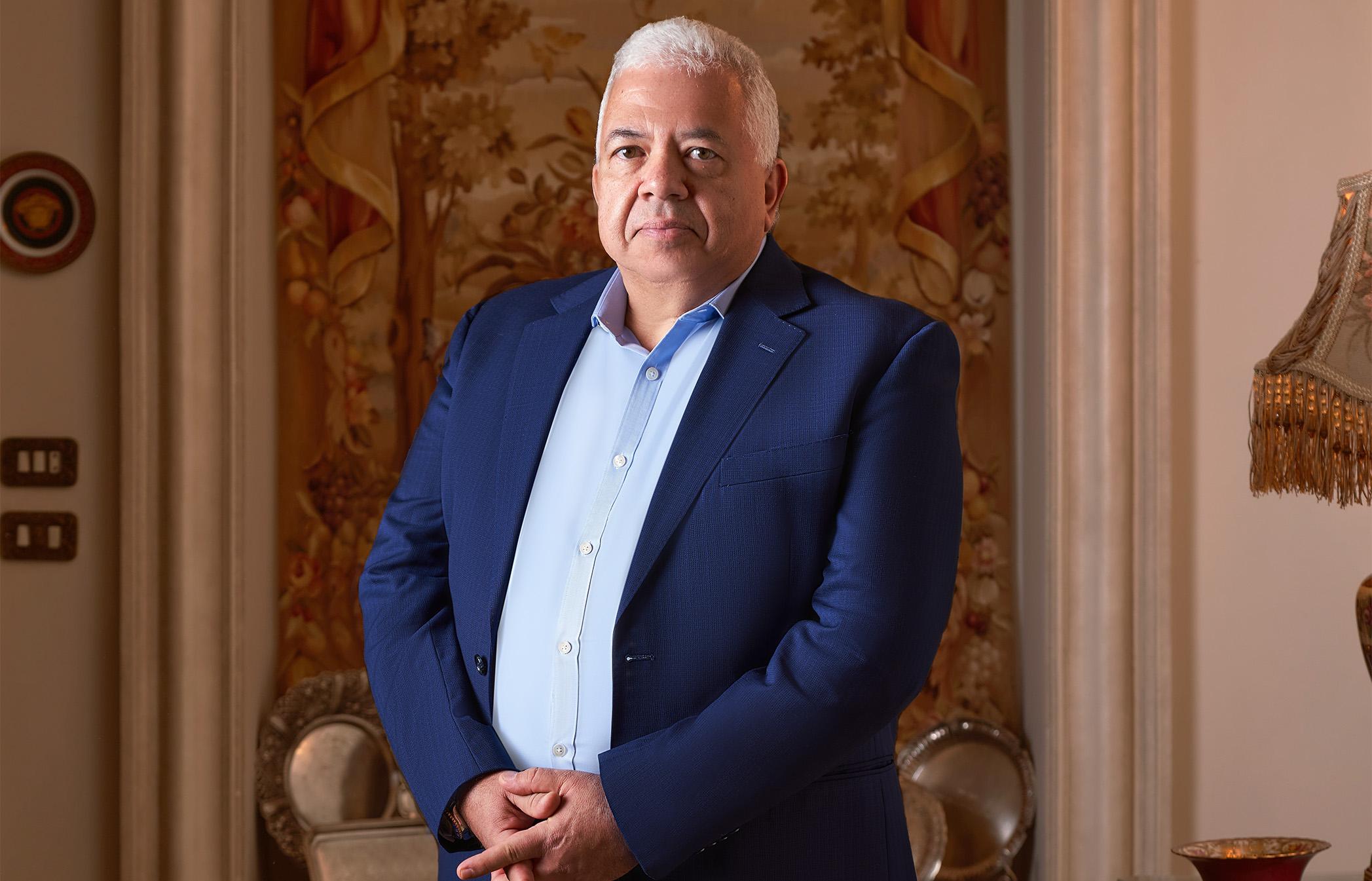
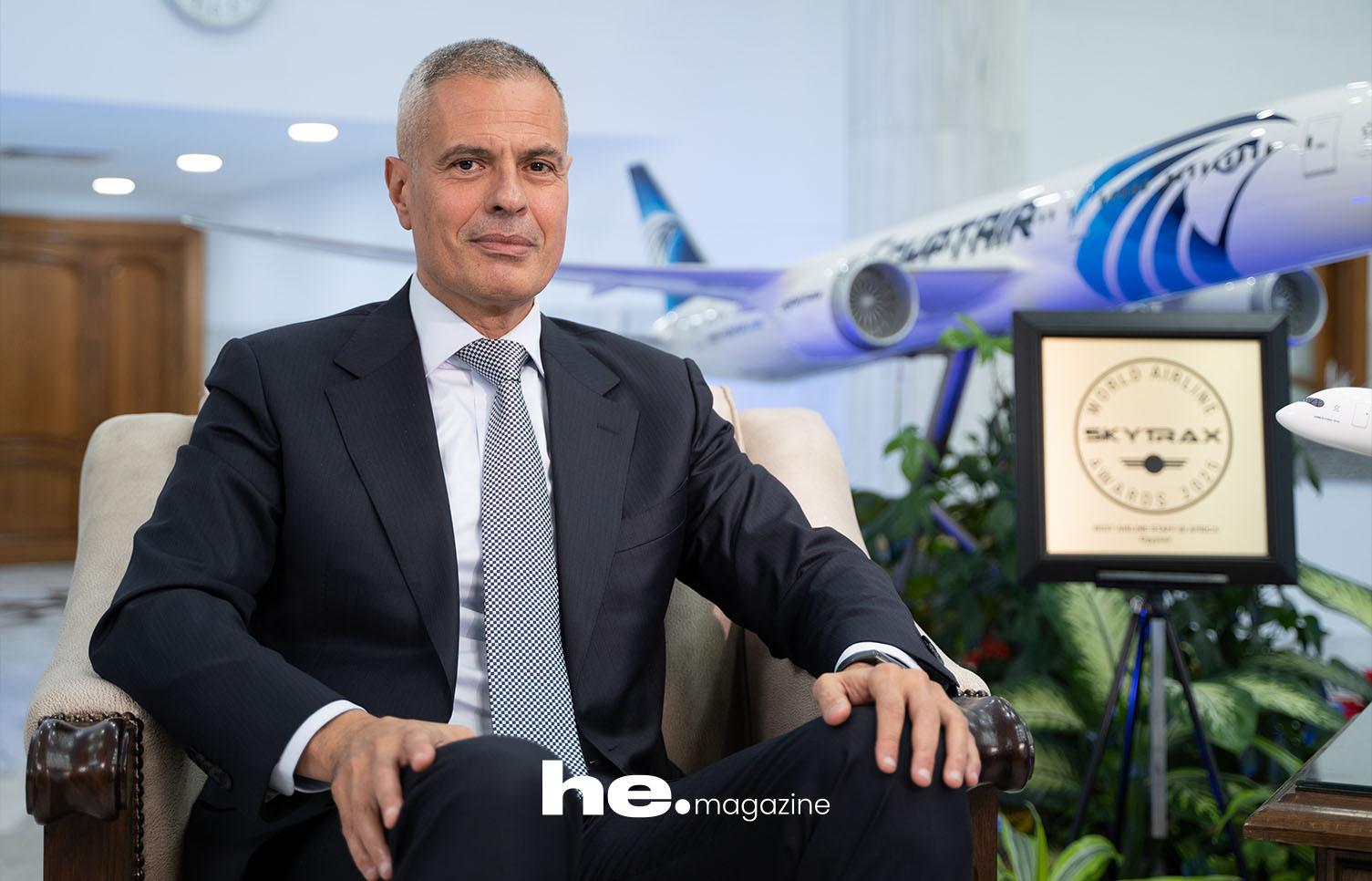
An Interview with EgyptAir holding company CEO Captain Ahmed Adel
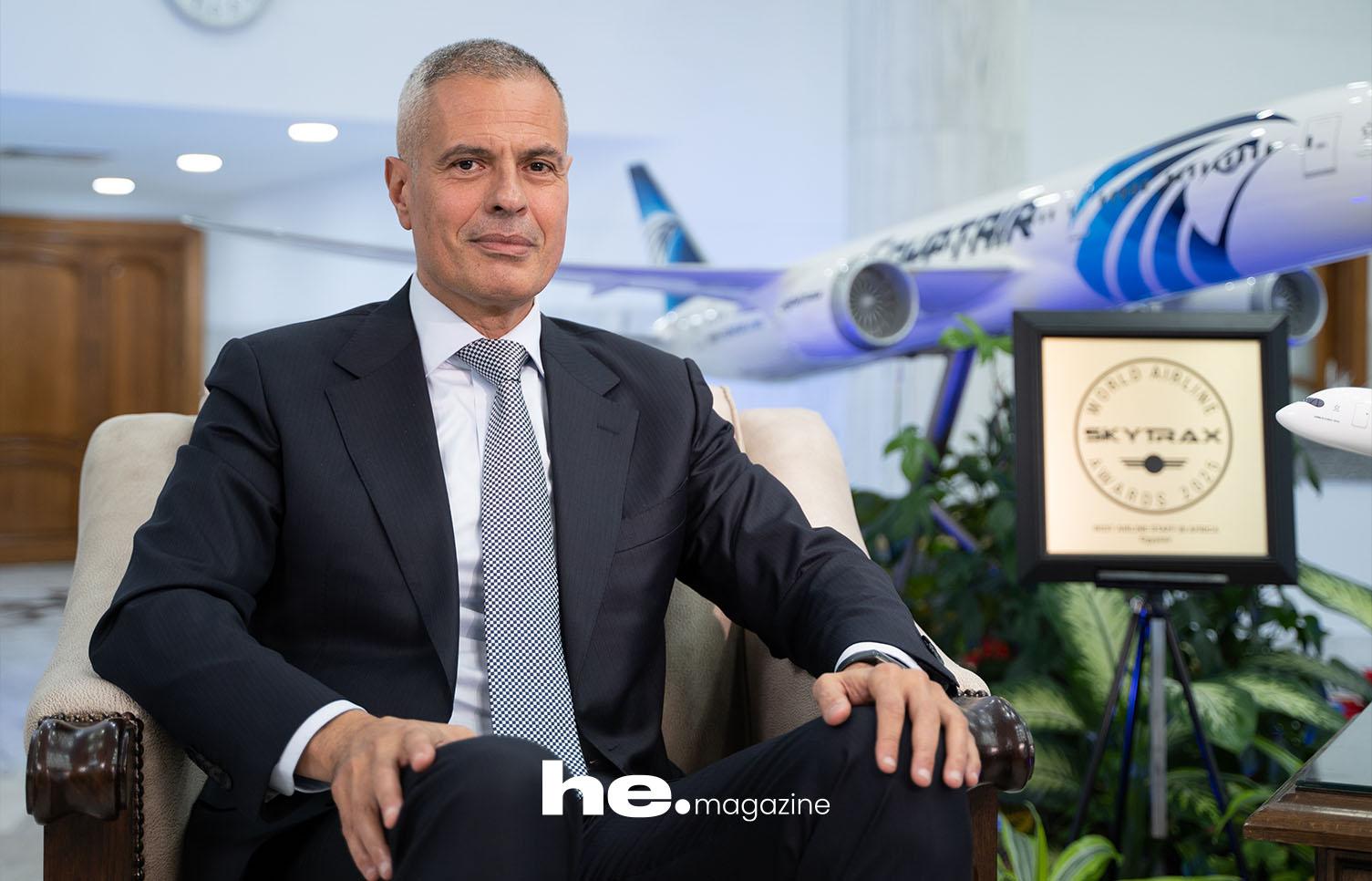
Tourism is the key driver of Egypt's recent growth, with a powerful surge touching nearly every sector of the nation. The influx of millions of visitors exploring its ancient heritage, vibrant cities, and coastal escapes has created an unprecedented demand for stronger infrastructure, modernized services, and globally competitive standards. Among the pillars rising to meet this challenge is EgyptAir, the national carrier and a longstanding symbol of the country’s identity, connectivity, and ambition. Leading this transformation is Captain Ahmed Adel, the CEO of EgyptAir holding company. With an extensive background in aviation management and a career spanning decades within the sector, he is uniquely positioned to guide the airline into its next era. His position at the helm of the nation’s flagship carrier provides him with unparalleled insight into the realities of increased tourism, the pressures and opportunities it brings, and how EgyptAir is evolving to serve a rapidly expanding global audience.
The unprecedented boom in Egypt’s tourism sector has placed EgyptAir at the centre of a national transformation, demanding rapid expansion, modernization, and infrastructural resilience. When asked how EgyptAir is gearing towards that, Captain Ahmed explained, “The developments happening across Egypt are a benefit to us as a large company, but they also put pressure on us to grow, to expand, and to match this momentum. Tourism numbers are at historic levels, and EgyptAir has embarked on one of the biggest development plans in its history to meet this challenge,” he explains. “We are expecting the arrival of 24 to 26 new aircraft in 2026 and 2027, reaching a total of 34 new planes by 2030. We’re also renewing and refurbishing 19 narrow-body aircraft interiors, adding two wide-body planes, and implementing major upgrades across our catering, ground handling, and repair services.” EgyptAir is not simply reacting to the tourism wave but positioning itself as one of its primary engines, expanding fleet capacity, modernizing passenger experience, and strengthening every supporting branch of its operations. In his view, the pressure is required and welcome. The airline’s role extends beyond transport; it is an essential arm of the nation tasked with securing both short-term needs and long-term strategic readiness.
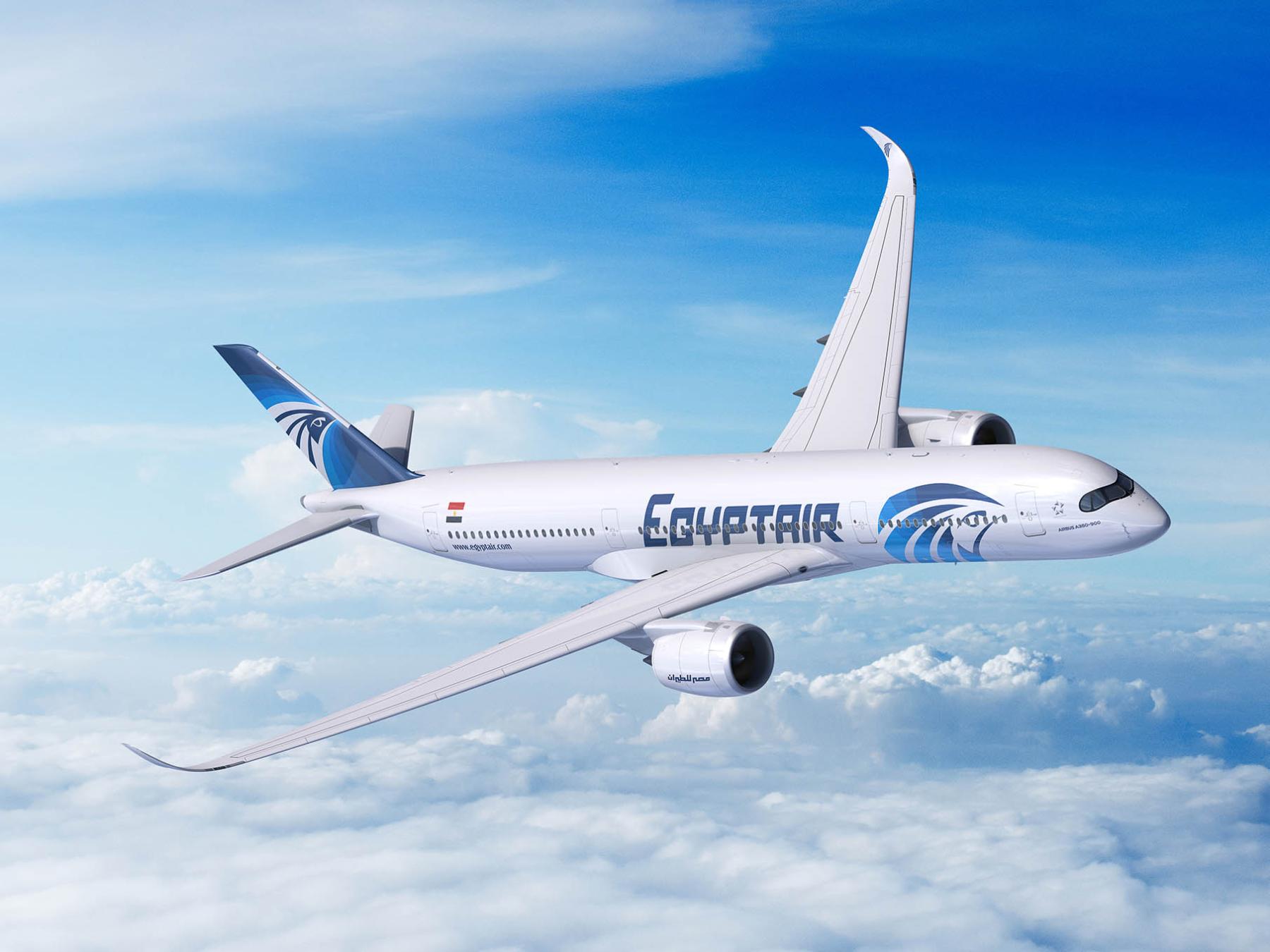
Rumours circulating on social media suggested that EgyptAir had cancelled its new aircraft orders, raising public concern at a time when the airline is undergoing major expansion. Clarifying the subject, Captain Ahmed stated, “To clarify, the purchase has already been completed; we are not in the process of buying; the deal is done,” he said firmly. “We are currently in the EIS phase, entry into service, and starting January 2026, we will receive five Airbus A350-900 aircraft, which are top of the line. After 37 years as a pilot, I can tell you Airbus technology is state-of-the-art. In 2026, we’ll also add eight Boeing 737 MAX aircraft, which are among Boeing’s most innovative models. From 2026 to 2030, new planes will arrive every year alongside a full refurbishment of existing cabins, from planes we already have in service” Despite the rumours, the reality is the opposite. EgyptAir is moving ahead with one of the most extensive fleet upgrades in its history, a plan aimed at meeting rising demand and delivering a more modern passenger experience.
Technical challenges are inevitable in modern aviation, but EgyptAir’s response to Airbus’s recent system issue offers a revealing look at how the company handles crises. Recounting the situation, Captain Ahmed said, “In developing an aircraft, the level of technology and sophistication means issues can arise,” Captain Ahmed explained. “When this happened with a plane in Mexico, an issue no one had ever seen before, Airbus acted with full transparency. Within hours, they halted all aircraft of that model until it was resolved. We immediately prepared on our side, got to work at 7 am Saturday, identified our 15 affected planes with our team of expert aircraft servicemen, and coordinated with Airbus. Once the directive dropped, each aircraft was serviced in three hours. Our teams work 24/7, 365 days a year, and the process ran without disturbance.” Speaking on those involved, Captain Ahmed said, “The teams at EgyptAir worked tirelessly, knowing they’d be the backbone of resolving the issue,” Captain Ahmed noted. “The President of Airbus in the Middle East personally coordinated with us, and our crews executed the plan seamlessly. It was remarkable to see how quickly everyone, from our maintenance teams to the broader flight community, came together to solve the problem efficiently and safely.”
As Egypt experiences a surge in tourism, passenger expectations have risen, placing greater demand on service quality across airports. Captain Ahmed emphasizes, “Our teams put in a lot of effort to ensure our services are top class globally. They’ve proven that no matter how difficult the task, EgyptAir continues to improve. Reaching the next level requires big moves and projects, and we have plans to enhance services across all EgyptAir airports. Within the next five years, passengers will experience integrated, digitally advanced systems designed to make travel seamless and streamlined. With websites, apps, and AI integration, everything will be organized organically over time; implementing it all at once wouldn’t work.” Rather than rushing technology in, they’re building systems that grow naturally with the airline and its passengers. It’s a reminder that improvement isn’t just about flashy upgrades; it’s about planning, timing, and ensuring that every touchpoint of the passenger experience feels effortless.

Airport access and regulations vary across Egypt, shaping how airlines plan their operations. Captain Ahmed notes, “What people might not realize is that nearly all airports in Egypt, except Cairo, operate under an open-skies unilateral system. Airlines can use these airports without a bilateral agreement that has been in place for a long time to support tourism. Cairo Airport is different because of existing bilateral agreements with European companies, which require careful coordination to maintain mutual benefits.” Egypt is unique in allowing open skies, making most airports accessible, and encouraging travel. Cairo remains a carefully managed hub due to its critical role in international connections and agreements. Looking ahead, there is growing interest in developing airports such as Alamein and Sahel El Shamali into year-round destinations. Captain Ahmed explains, “This isn’t something I personally make decisions on, but the government has ambitious plans that will make us all proud as a nation. I can assure you that everyone involved has put together a plan that will be immaculate when executed.”
As Egypt’s tourism and international connectivity expand, the airline is actively identifying destinations with growing demand. When asked what the process for selecting new destinations is and where we might expect to fly soon, Captain Ahmed explains, “We fly to approximately 85 destinations around the world. We begin by selecting routes with high yield, then expand to other places showing strong or emerging demand. Opening new destinations is purely based on demand. Once we receive the new Airbus A350-900s, we plan to start flying to the West of America, Los Angeles and Chicago, which wasn’t feasible with our older planes. For Los Angeles, we’re aiming for the second term of 2026. We’re also exploring increased trips and new routes to the Far East, studying their feasibility carefully.” Fleet expansion directly enables route growth, which might be difficult with older planes due to higher maintenance costs. This ensures the airline can meet rising passenger demand while maintaining operational efficiency.
The global aviation industry has faced unprecedented challenges in recent years, from the COVID-19 pandemic to geopolitical conflicts in Europe, forcing airlines worldwide to navigate severe losses. When asked if Egyptair has resumed making a profit, Captain Ahmed confirms, “Short answer, yes. The minister mentioned in a news interview that we have made record-breaking profits, the highest the company has ever seen in either Egyptian or foreign currency. Many of these situations were unforeseen; no one could have predicted that one day every plane in the world would be grounded. Yet the industry has shown it can adapt and bounce back. With our efforts, projections, and ongoing developments, we anticipate continued growth and expect large numbers of travellers to choose Egypt. I was at an expo in London, and people were extremely happy for us and excited by what we’re doing.” EgyptAir’s remarkable rebound isn’t just a testament to the company itself; it reflects the resilience of the entire aviation industry and the strength of the community that keeps it running.
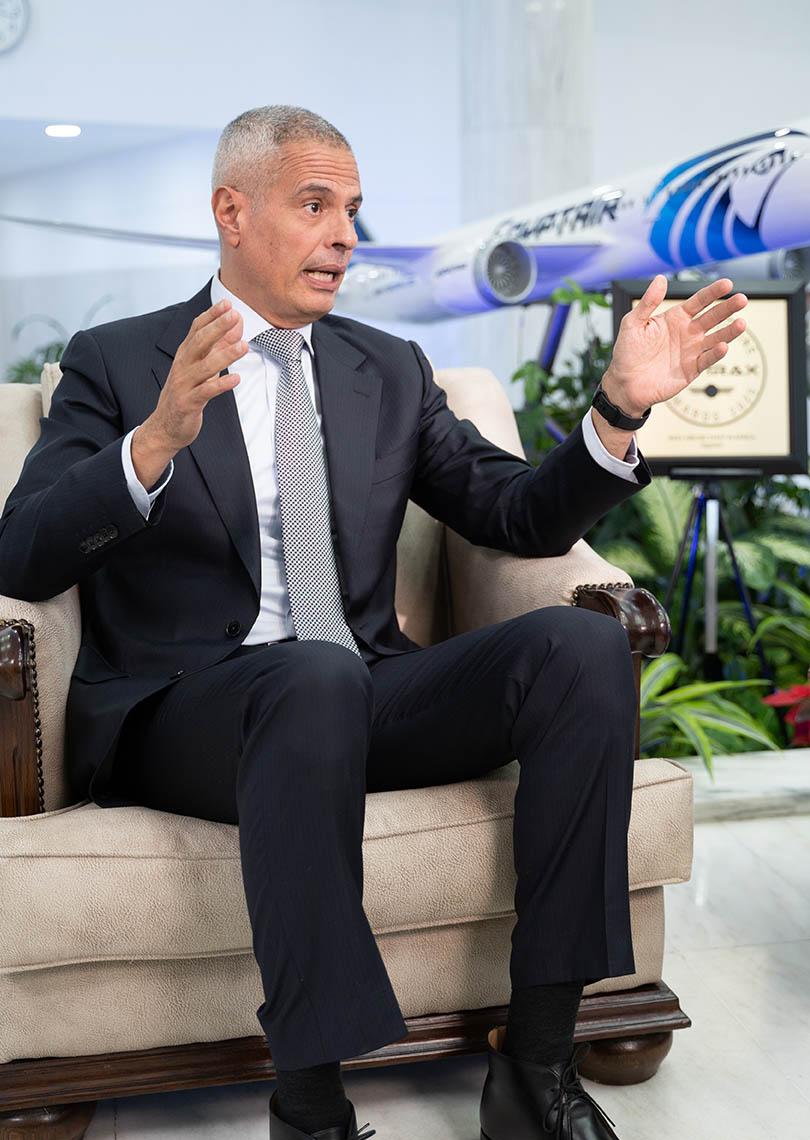
EgyptAir's domestic pricing strategy is highly dynamic. As Captain Ahmed Adel notes, "Ticket prices are constantly adjusted to ensure fairness; if they are too high, seats go unfilled, but if they are too low, demand overwhelms capacity. This fluid system, influenced by platforms like booking websites and apps, mirrors the flexibility seen in the hotel industry." EgyptAir carefully tunes its pricing to match demand, maintaining a crucial balance.
Cargo shipping is another area in which EgyptAir is actively developing to meet the country’s growing trade and tourism demands. Captain Ahmed Adel explains, “We have two forms of cargo shipping, including belly cargo. When there are fewer passengers, the extra belly space helps increase revenue. We’re converting three AB 330-200s into dedicated cargo planes, and two more will follow under our new plan. There are enormous opportunities ahead, from shipping Egyptian-made products to meeting global demand, and our network is poised to grow and strengthen.” EgyptAir isn’t just thinking about passengers; they’re thinking about the movement of goods as a key part of Egypt’s economic growth. By converting planes and expanding their cargo network, they’re turning untapped potential into real revenue, while also supporting local producers and connecting Egypt to markets worldwide.
Egypt has long cultivated a unique culture of aviation, producing pilots who are recognized for their skill and dedication. When asked what makes Egyptian pilots different, Captain Ahmed Adel explained, “There is a lot of truth to it because we’re a nation that has a massive infatuation with flight. After 37 years, whenever I’m flying, it feels like I’m young, and it’s always an adventure. To reach the level of our pilots here in EgyptAir, you need to pass one of the most rigorous training programs in the world. You integrate yourself with Boeing, with Airbus, with simulators. You keep studying and testing over and over until you reach our industry level.” With a history steeped in aviation, from early pioneers to modern military and commercial achievements, Captain Ahmed Adel emphasizes that “with such a history, you can’t help but be invested in it,” reflecting the deep-rooted national passion for flight that shapes every Egyptian pilot.
Even the most experienced pilots face moments that test their skills and composure. When asked about what his most difficult moment was in the air, Captain Ahmed recalls, “Over 37 years, I’ve faced quite a few challenges, but one that stands out was in 2006 on a flight to Kuwait. I had an issue with one of the gears on that plane, and it was my first trip on it after completing training. Thankfully, my co-pilot was exceptional, and together we handled the situation efficiently.” Even for a seasoned pilot like Captain Ahmed, handling a gear issue mid-flight required seamless coordination and trust between him and his co-pilot, demonstrating that every successful operation in the sky relies as much on collaboration as it does on individual skill.
Interview by: Amr Selim
Photography: Mohamed Fathi
Videography: Hany Farag
Written by: Mahmoud El Demerdash