Written by: Sabah Awan
Date: 2026-06-24
Prince of Arabic Song, Between Glory and Grief
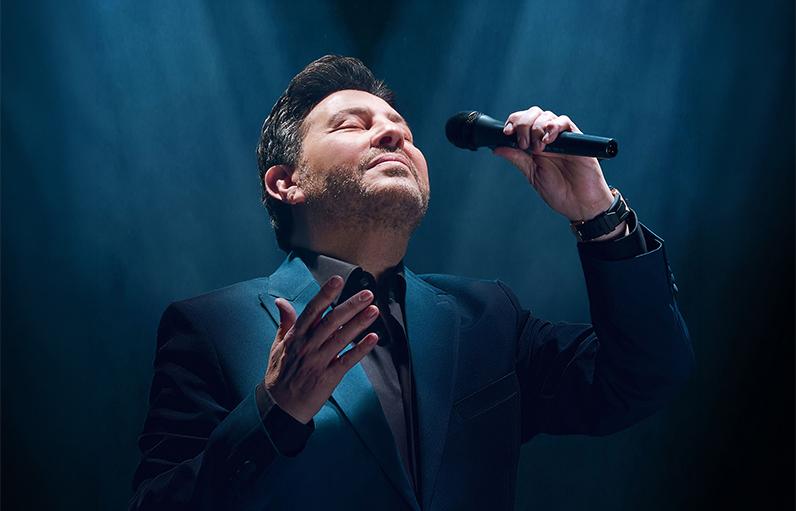
The Voice That Never Fades...
On a quiet morning in old Cairo on December 21st, 1952, a small child was born into a modest family. At that moment, no one could have imagined that this child, named Hany Shaker, would one day become one of the most prominent voices shaping the emotional landscape of modern Arabic song, or that his life would unfold into a long journey stretching between artistic glory, human fractures, public struggles, and an enduring belief that the voice can outlast everything else. His father, Abdelaziz Shaker, worked at the Tax Authority, while his mother was employed at the Ministry of Health.
Embarking on a dream
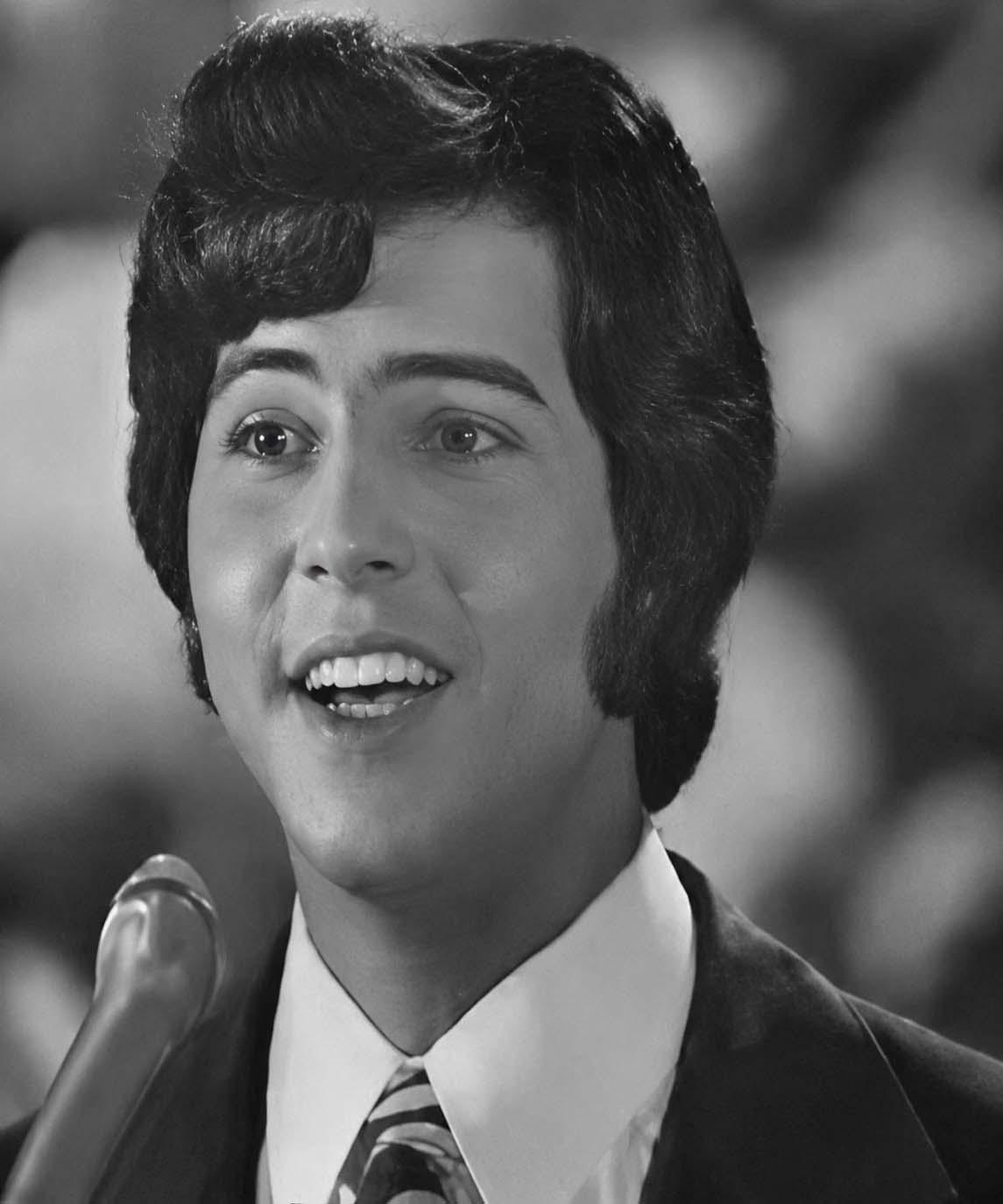
From an early age, Shaker appeared in children’s television programs, and his first cinematic appearance came at age 14, in the 1966 film Sayyid Darwish, in which he portrayed the young Sayyid Darwish.
Later, Shaker joined the Higher Institute of Music (the Conservatoire), where he studied music formally. In the early 1970s, Egypt’s artistic scene was overflowing with towering voices, making it difficult for a young singer to carve out a place amid such intensity. Yet fate intervened through the composer Mohammed El Mougy, who discovered in Shaker’s voice a distinctive texture — one that blended quiet romance with deep emotional resonance. From this encounter was born the song “Helwa Ya Dounya” in 1972, which was not merely a professional debut, but the announcement of a new artistic birth.
That song, which some saw as an extension of the Iconic Abdel Halim Hafez school of emotional expression, placed Shaker in a delicate zone between imitation and innovation. Gradually, however, he proved that his voice was not a shadow of anyone else’s, but an independent presence searching for its own identity. Two years later, the album “Kida Brado Ya Amar” (1974) confirmed that this voice was no longer a mere experiment, but a genuine popular presence.
At that stage, Shaker began to take shape as a complete artist — one who did not rely on a single hit, but on an evolving musical project. The 1970s became a period of consolidation for him, as he transitioned from a “rising singer” to a “recognisable name,” within an audience that began to receive him as a new romantic voice carrying the contours of the generation that would follow the giants of classical Arabic singing.
600 songs
Over time, his body of work expanded to include more than 600 songs and around 30 albums, through which he collaborated with major composers and lyricists, including Salah El Sharnouby, Bahaa El Din Mohammed, Mostafa Kamel, and others. His most recent album, Al-Youm Jameel (2024), included nine songs that reflected his ability to keep pace with the times without abandoning his artistic identity.
His songs were never merely musical productions; they were emotional milestones in the lives of an entire audience. Tracks such as “Alyy El Dahkaya" (Make The Laughter Louder), “Wala Kan Be Amri" (It Was Never in My Hands), “ Ya Raytak Maaya" (If Only You Were With Me) and “El Helm El Jameel” (The Beautiful Dream) were not just titles in an artistic archive, but part of the emotional memory of a whole generation.
Despite this overwhelming musical presence, Shaker’s dream of acting never fully disappeared. It remained an intermittent ambition, appearing only in limited moments. He participated in early cinematic works such as "Endama Yoghanny Elhob" (When Love Sings) and “Aysheen Lelhob" (Living for Love) and appeared in musical theatre experiences like "Sindirella wa El Maddah" (Cinderella and El Maddah) in 1974. He also took part in "Misr Beladna" (Egypt is Our Home) in 1974 alongside Fayza Ahmed, and in the operetta “Anshoudat Al-Orouba" (The Song of Arabs) in 2001 at the "Janadriyah" Festival.
Yet in the end, he remained more faithful to his voice than to any other medium. He always returned to singing, as though his voice pulled him back to its only true home, making it clear that for him, singing was not merely a profession, but a complete identity.
With his decades of experience, Shaker also participated as a judge in major talent programs, most notably The Voice, as well as Sout El Hayat, alongside Samira Said and Helmi Bakr, where he passed his experience on to new generations.
Union Leadership
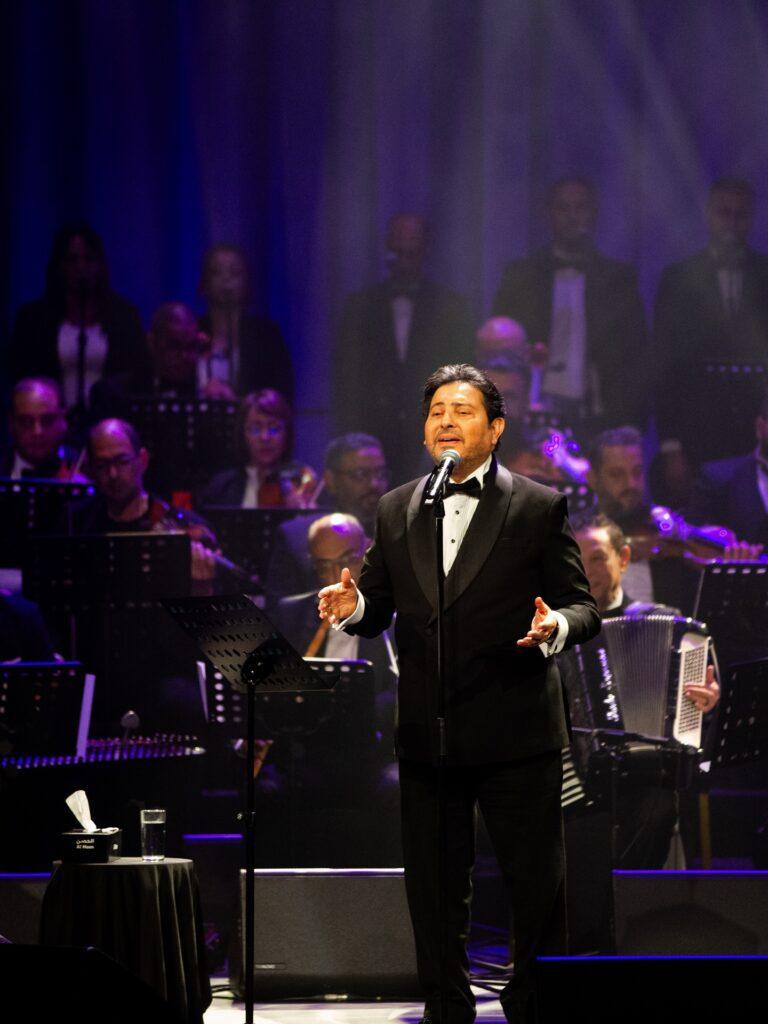
As he grew older, Shaker entered a different phase of his artistic life when he assumed the position of Head of the Musicians’ Syndicate. At that point, he was no longer only an artist, but a participant in a complex regulatory and cultural equation. He found himself confronting questions about public taste, the limits of artistic freedom, and the shape of new music, especially amid the rise of new musical styles that sparked wide controversy.
In 2015, Shaker won the position of Syndicate Head with 1,060 votes out of 2,145, ahead of his competitors. Although he resigned in early 2017 following widespread criticism, he later withdrew his resignation at the council’s request. He subsequently returned to win a landslide victory with 75% of the votes.
During this phase, his voice was no longer confined to the stage; it became part of decisions, positions, and intense institutional conflicts. In 2019, he notably took action to ban sixteen “mahraganat” (folk) singers, based on a 1978 law requiring syndicate membership to perform concerts, justifying the decision as an attempt to preserve artistic values. The move sparked widespread debate and reinforced his image as a defender of musical identity.
For him, the syndicate was not merely an administrative post, but an extension of his vision of art itself: an art that must have standards, identity, and value. Yet these positions also placed him at the centre of continuous controversy, between those who saw him as a guardian of public taste and those who considered him overly rigid in his outlook.

Honours and Awards
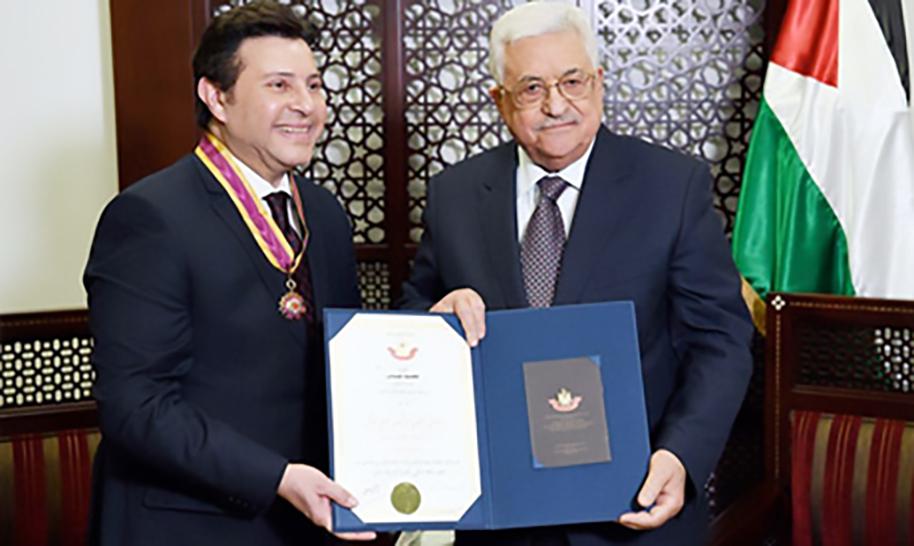
Hany Shaker received numerous honours as one of the most prominent classical voices in the Arab world. Among the most notable was the Tunisian Order of Merit, awarded to him by former Tunisian President Zine El Abidine Ben Ali, making him the second Arab artist to receive it after the Lebanese singer Fairuz.
He also received the Palestine Award, presented to him by Palestinian official Saeb Erekat, in recognition of being one of the first artists to perform in Palestine.
He was honoured in many festivals, including the Jordanian Festival for Arab Media, the Music Video Festival, and the Oscar Festival. He was also honoured in the Kingdom of Saudi Arabia during cultural and artistic events organised by the General Entertainment Authority.
Personal Life
Shaker’s personal life was quiet and stable despite certain tragedies. He married Nahla Tawfiq in 1982, and their marriage is often cited as an example of personal and artistic stability. They had two children: Dina (born 1984) and Sherif (born 1987).
In 2011, Dina passed away after a long and painful battle with cancer, marking a devastating moment that became the most difficult experience of his life. His voice changed; its tone grew heavier, as though grief had seeped into the very texture of his singing. In rare moments of honesty, he would say that this experience broke something inside him that could never be repaired, and that he began to see art differently after that loss.
From that moment on, Shaker was no longer merely a singer of love songs; he became a voice carrying an additional layer of authentic human sorrow — sorrow not written in lyrics but heard in the subtle spaces between phrases.
Unforgettable
Despite everything, Shaker remained, in the eyes of his core audience, the “Prince of Arabic Song” — the voice that accompanied them through love, loss, nostalgia, and memory. His voice remained a constant landmark in a time when nearly everything else had changed: rhythm, taste, song structure, and even the way music was listened to.
Over the decades, it became difficult to separate Shaker from the idea of the “golden era,” not only because he belonged to it, but because he continued to embody it through his voice and style. He always stood at the boundary between past and present, between classical song and attempts at renewal, between the artist who sings and the official who decides.
The President of the General Union of Arab Artists and Head of the Cinematic Professions Syndicate, director Massad Foda, received a large number of condolence messages from syndicate heads and leaders of artistic associations across several Arab countries, including Morocco, Lebanon, Iraq, and the Kurdistan Region, as well as phone calls from Arab artists expressing solidarity with the Egyptian people and Egyptian artists over the passing of the legendary singer Hany Shaker.